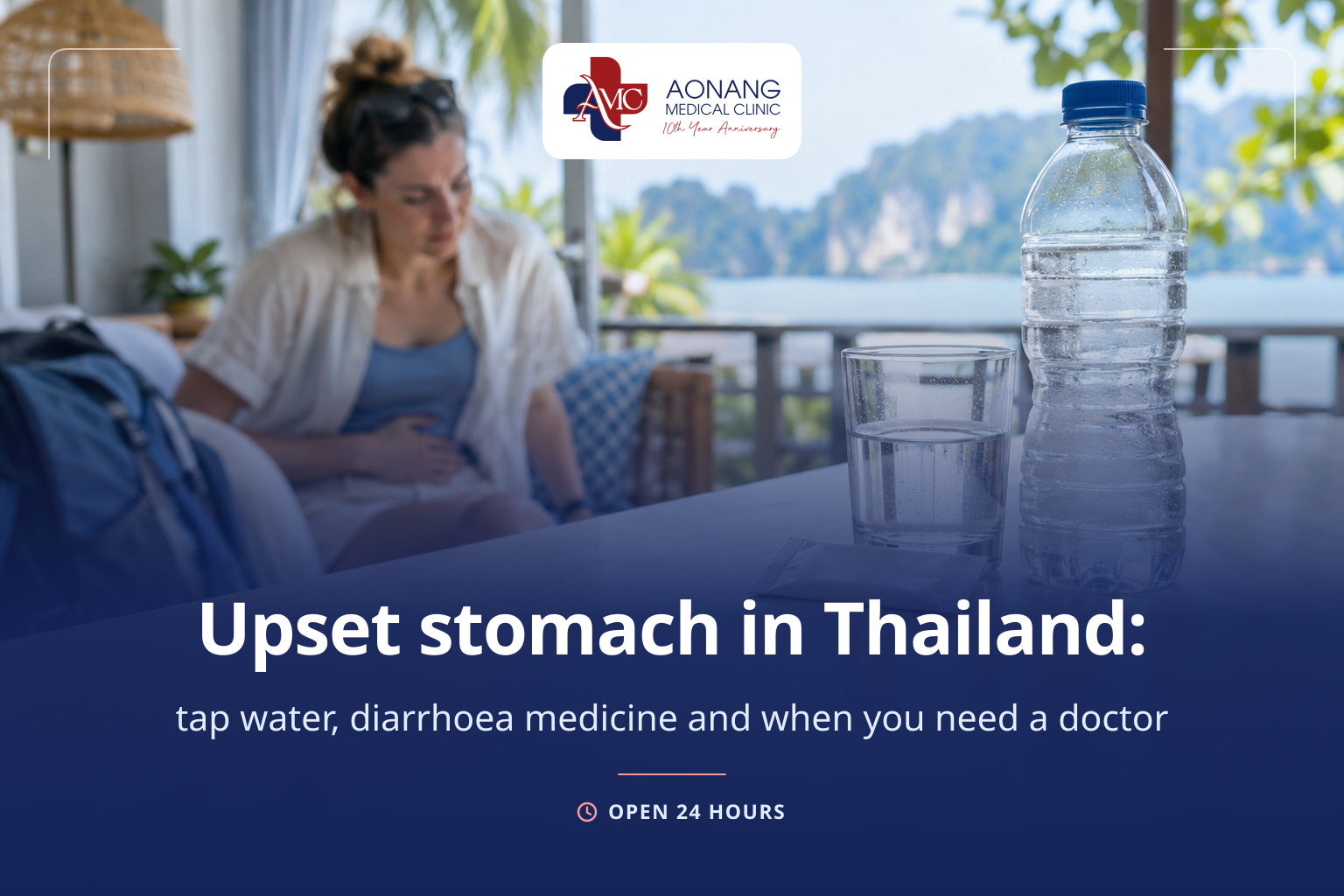
Short answer: Most upset stomachs in Thailand are mild traveller’s diarrhoea and settle within one to three days. The most important treatment is replacing fluids with oral rehydration salts (ORS), which are sold at pharmacies and convenience stores.
- Tap water: do not drink it. Use bottled or filtered water.
- Ice: ice served in restaurants and bars is usually commercially made from purified water.
- See a doctor if you have a high fever, blood in your stool, severe stomach pain, cannot keep fluids down, show signs of dehydration, or are not improving after 48 hours.
Can you drink tap water in Thailand?
Tap water in Thailand is not recommended for drinking. Although it is treated at the source, pipes and storage tanks can contaminate it before it reaches your tap. Most travellers and residents drink bottled or filtered water, which is cheap and easy to find.
- Brushing teeth: most people brush with tap water without problems. If you have a sensitive stomach, use bottled water.
- Ice: the cylindrical ice with a hole in the middle, common in restaurants and bars, is produced in factories using purified water and is generally considered safe.
- Refill stations: coin-operated water machines are common in Ao Nang and are a lower-cost way to refill bottles.
Diarrhoea medicine in Thailand: what is available
| Medicine | What it does | Points to know |
|---|---|---|
| Oral rehydration salts (ORS) | Replaces water, salt and sugar lost through diarrhoea and vomiting | The most important treatment. Mix exactly as directed on the packet. |
| Loperamide (for example, Imodium) | Slows the bowel and reduces how often you go | For short-term use only. Do not take it if you have a fever or blood in your stool. Not for young children unless a doctor advises it. |
| Activated charcoal | Widely sold in Thailand for stomach upsets | Evidence of benefit is limited. It can reduce the effect of other medicines taken at the same time. |
| Probiotics | Support normal gut bacteria | Generally safe; the effect is modest. |
| Antibiotics | Treat certain bacterial infections | Should be prescribed by a doctor. Most traveller’s diarrhoea does not need them, and the wrong antibiotic can make things worse. |
How to use ORS
- Dissolve one sachet in the exact amount of clean drinking water stated on the packet.
- Sip small amounts often, especially after each loose stool or vomit.
- If you vomit, wait 10 minutes and start again, more slowly.
- Make a fresh mix every day.
Sports drinks and soft drinks are not a replacement for ORS, as their sugar and salt balance is different.
What to eat and drink
- Keep drinking: ORS, water, clear soup and weak tea.
- Eat small, plain meals when you feel ready, such as rice, rice porridge, toast, bananas and crackers.
- Avoid alcohol, coffee, spicy food and very fatty food until you have recovered.
When you need a doctor
See a doctor promptly if you have any of these warning signs:
- Fever of 38.5°C or higher
- Blood or mucus in your stool, or black stools
- Severe or constant stomach pain
- Vomiting that stops you keeping fluids down
- Signs of dehydration: very little or dark urine, dry mouth, dizziness when standing, or a fast heartbeat
- No improvement after 48 hours
- Confusion or unusual drowsiness
Seek care earlier for young children, older adults, pregnant women and people with long-term conditions such as diabetes, heart or kidney disease, as they become dehydrated more quickly.
What we do at the clinic
- Assess your symptoms and level of dehydration
- Run a stool or blood test if needed
- Give fluids through a drip (IV fluids) if you are dehydrated or cannot keep fluids down
- Prescribe medicine to control nausea, pain or infection where appropriate
- Advise you on whether you are fit to fly
If you are too unwell to leave your room, a doctor can come to you. See hotel visits. For more on symptoms and treatment, see our page on food poisoning and Bali belly.
Still unwell after a day or two?
Aonang Medical Clinic is open 24 hours for stomach bugs, food poisoning and dehydration, including IV fluids. Call or WhatsApp +66 93 149 6554 to come in or request a hotel visit. We work with more than 130 travel insurers.
Frequently asked questions
Can you drink tap water in Thailand?
It is not recommended. Use bottled or filtered water for drinking. Most people brush their teeth with tap water without problems.
Is ice safe in Thailand?
Ice served in restaurants and bars is usually commercially made from purified water and is generally considered safe.
What is the best diarrhoea medicine in Thailand?
Oral rehydration salts (ORS) are the most important treatment. Loperamide can help short-term if you have no fever or blood in your stool. Antibiotics should only be taken if a doctor prescribes them.
How long does a stomach bug last in Thailand?
Most cases improve within one to three days. See a doctor if you are not improving after 48 hours or have warning signs such as fever, blood in your stool or dehydration.
Can I get IV fluids in Ao Nang?
Yes. Aonang Medical Clinic can give IV fluids if you are dehydrated or cannot keep fluids down. The clinic is open 24 hours.
Is it food poisoning or traveller’s diarrhoea?
The two overlap. Food poisoning often starts suddenly within hours of a meal, with vomiting. Traveller’s diarrhoea is a broader term. The treatment and warning signs are the same.